

| Marple Hall Glass |
|
|
This article, by Mark Whittaker, appeared in the January 2001 issue of the Community News (formerly the Romiley and Marple Mail) in our regular feature "Local History & Heritage with the Marple Website" The two feed-back items that accompanied it are on a separate page. |
![]()
|
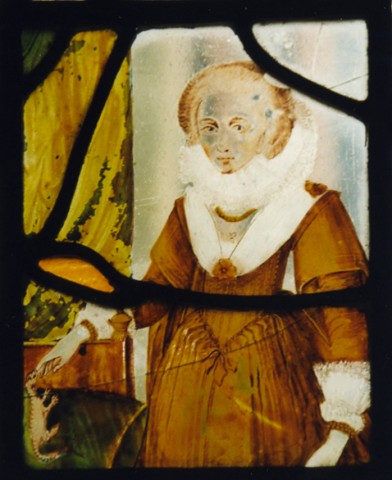
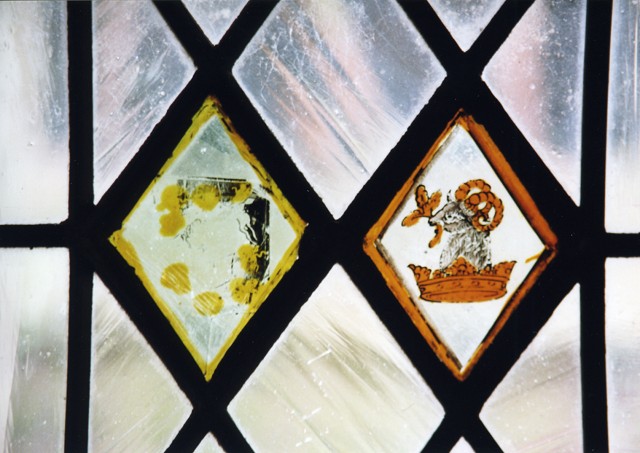
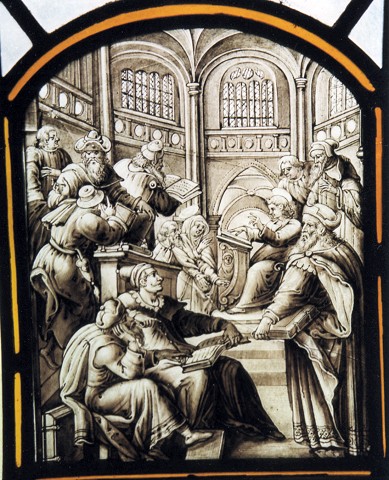
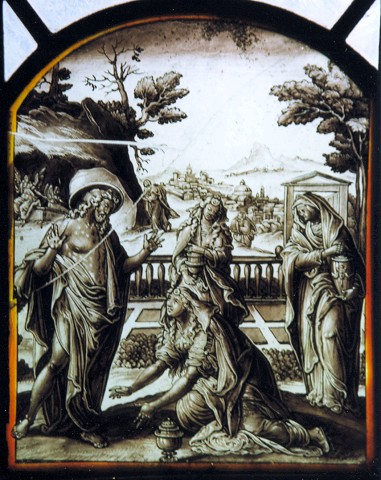
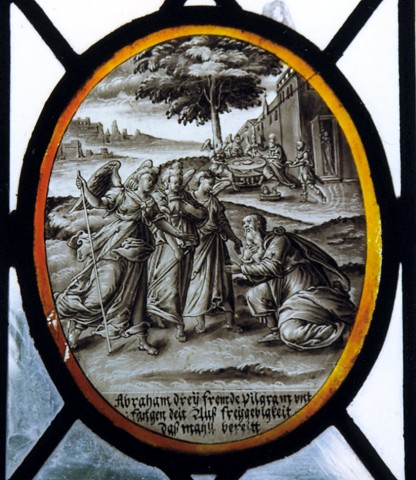
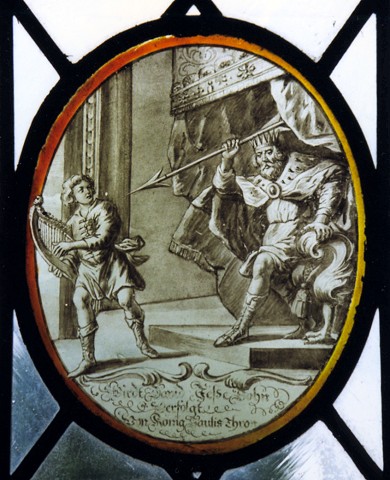
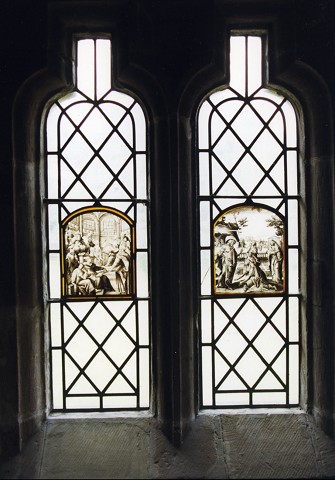
In the Heritage section of Marple Library a couple of years ago I came across a photocopy of an article from the April 1954 issue of Cheshire Life magazine. Written by Thomas F. Willford, it described a trip to Marple Hall during its final days of decline. The caretakers had retired in 1953 and after years of neglect by the owners the already sorry condition of the hall deteriorated rapidly. Vandalism accelerated the decline and removal of lead flashing from the roof caused a chimney to crash down through it, destroying the magnificent central stairway and spewing rubble into the entrance hall. Willford's article described a mission to rescue several painted glass panels from this hallway before they were also vandalised or destroyed as the building continued to crumble in upon itself.
|
|
|
|
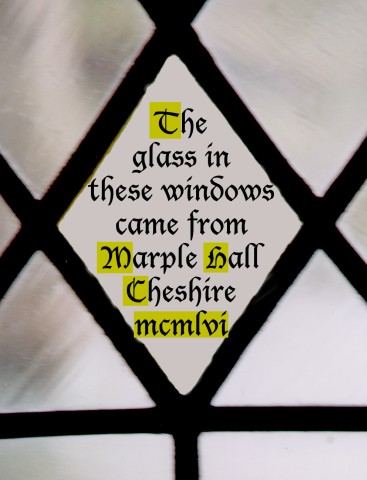
The article explained that the glass was to be relocated to St. Boniface's Church in Bunbury, Cheshire, which had lost most of its stained glass to a German bomb during WW2. This was a village with a link to Marple Hall already, as John Bradshawe attended Aldersley Grammar school in Bunbury whilst completing part of his education.
I was intrigued by this story and keen to discover if the relocation had gone
to plan. A search on the Internet revealed that St. Boniface's has its own web
site, including a guided tour with photographs and descriptions of the
inside of the ancient church. Despite this, no mention of Marple Hall's glass
was to be found. Undeterred, I sent a message to St. Boniface's webmaster, Peter
Crump, to explain my interest and quickly received a positive reply. The glass
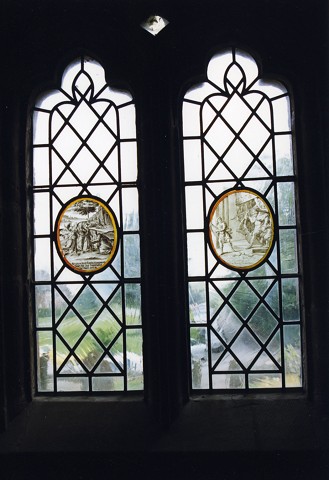
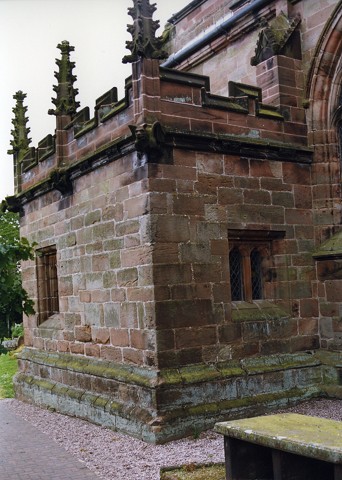
was at the church, in the windows of the vestry but as this was not open to the
public it did not feature on the web site.
Accompanied by friend and local photographer David Brindley on the trip to Bunbury, it was fascinating to see the panes of glass in their new location and to exchange notes about their history with Peter and Church Warden John Elsworth. It was also interesting to discover that we were not the first visitors from Marple to come and see the glass, as the Local History Society had made the same trip several years earlier.
One small mystery remained unresolved. Willford's article mentioned that one of the panes taken from the hall depicted the poet John Milton, a cousin of John and Henry Bradshawe but of this there was no sign. John provided the name and address of the Reverend Maurice Ridgway, the vicar at the church during the time the glass was relocated, in the hope that he could resolve this riddle.
When the photographs were developed I set up a series of pages on the web site about the glass including a full reproduction of the Willford article after gaining permission to use it from Cheshire Life. They were even kind enough to loan me one of their archive copies of the magazine so I could scan the pictures from it. At the same time I wrote to Rev. Ridgway and explained my curiosity about the missing panel of glass. The Reverend sent a very interesting reply, extracts from which now follow:
| Dear Mr. Whittaker,
I am delighted to hear from you, for you take me back to some of the happiest days of my ministry at Bunbury – and being now over eighty, you catch me before I pop off! I think I had better put you in the picture. I was asked to go to Bunbury as the church had been a victim of a Nazi land mine which had done an enormous amount of damage and nothing had been done to repair it. I had always taken a great interest in medieval work, so I rather rejoiced over being able to work as both parish priest and restorer. It was during this time that the stained glass at Bunbury had to be considered. Twenty-four stained glass windows had been destroyed, including some pretty awful ones, for which I thanked Hitler! But the ones in the Vestry (the old Treasury) had some rather nice panels on the story of St. Boniface. These had all been destroyed as the bomb had fallen on this side. Working with Graham Webster, then Curator of the Grosvenor Museum in Chester, we knew of the Bradshawe connection with Bunbury and also the pathetic state of Marple Hall – so made an appointment to meet that curious brother of the USA living Isherwood and had a memorable meeting with him at the Hall, among the fast growing debris of the place. It was then I saw the panels which Willford refers to in his Cheshire Life article. I corresponded with Willford and asked him to remove them, having bought the glass from Isherwood during our visit. But seeing the dreadful vandalism then taking place – Graham decided to buy for the museum the panelled room and over-mantle with all its 17 th Century coats of arms. Isherwood, I think, accepted £100 for the lot and I think I gave him £10 for the glass.The glass is all now at Bunbury except the Milton panel which came with the other pieces. It was very inferior to the others and I remember it well. It was a rectangular pane (no leading) and was orange in colour with a line drawing on it of John Milton – memory tells me it was about 8" x 10". I did not think it worth putting in the church as I believed it was a poor copy. It remained at the Vicarage along with one or two paintings whilst I was getting ready to move from Bunbury to Bowden and then we had "visitors" who took the paintings and the glass. I am very sorry that they were never found. I have tried to find out what happened to the paneling and coats of arms but was told "they know nothing about it" at the museum. I'm sure this could be traced through the City – and I hope it will be. Graham Webster has his name now attached to the Webster Gallery at the Grosvenor Museum and I have the Ridgway Gallery – so we still have our link after all these years. I hope the above is of use, do ask if you would like to know more. Best wishes, Maurice Ridgway. |
Obviously the glass is in safe keeping but it's a long way to go to see it in Bunbury and it's also not possible to gain access to the Vestry without an appointment. For anyone who is interested in seeing the glass, the next best thing is to visit the Marple Library Heritage section, where above the restored shutters from Marple Hall a photograph of each panel is now displayed.
Thanks and acknowledgements are due to:
Cheshire Life Magazine
Photography - David Brindley
Peter Crump & John Elsworth
Feed Back Items accompanying this article in the paper.
![]()